
Virtual Interior Design Services: Market Adoption & User Feedback Analysis
Virtual interior design has quietly moved from a pandemic workaround to a permanent layer of the design market.

Virtual Interior Design Services: Market Adoption & User Feedback Analysis
Virtual interior design has quietly moved from a pandemic workaround to a permanent layer of the design market. While it’s often framed as a budget or convenience play, the more interesting story sits underneath: who is actually using these services, why they stick (or don’t), and what the data tells us about where virtual design fits long-term.
This post looks at market adoption, user growth, and real client feedback, with a closer look at leading platforms like Havenly, Decorilla, and similar services.
The Market at a Glance: Adoption & Growth
Virtual interior design (often called e-design) expanded rapidly between 2020 and 2022, but unlike many pandemic-era services, it didn’t collapse once in-person options returned.
Key market signals:
The global online interior design market is estimated to be worth USD $1–1.5 billion and is projected to grow at 8–10% CAGR through the mid-2020s (various industry and market research reports).
In North America, virtual design adoption is strongest among:
renters
first-time homeowners
remote workers
budget-conscious renovators
Repeat usage is lower than full-service design, but higher than one-off consultation services, suggesting virtual design occupies a middle ground rather than a replacement role.
The most important takeaway: virtual design is not cannibalizing full-service design at scale — it’s capturing a different client segment.
Who Uses Virtual Interior Design (and Why)
Across platforms, user data and reviews point to consistent client motivations:
Primary drivers:
Cost control (packages often range from $79–$499 per room)
Speed (design concepts delivered in days, not weeks)
Accessibility (geography, childcare, work schedules)
Low emotional risk (easier to disengage if it’s not a fit)
Virtual design clients are often:
less emotionally attached to the process
more outcome-oriented
comfortable with digital communication
willing to trade depth for efficiency
This matters when evaluating feedback.
🇨🇦 Canada-Specific Adoption Notes
Virtual interior design adoption in Canada follows many of the same patterns seen in the U.S., but with a few important regional and structural differences that shape how these services are used — and how effective they are.
Adoption Is Strongest in High-Cost Urban Markets
Canadian uptake is most concentrated in:
Greater Toronto Area
Greater Vancouver
Lower Mainland / Fraser Valley
Calgary & Edmonton
Halifax (increasingly)
In these markets, clients are:
priced out of full-service design
renovating or furnishing smaller spaces
managing tight budgets alongside high housing costs
Virtual design fills a gap between DIY overwhelm and full-service unaffordability.
Canadian Users Are More Budget-Constrained Than U.S. Counterparts
User feedback and pricing sensitivity suggest:
Canadian clients are more cautious about add-ons
there is higher resistance to open-ended fees
fixed-price packages perform better than hourly models
This aligns with broader Canadian consumer behaviour:
higher household debt
higher housing cost-to-income ratios
less tolerance for scope creep
As a result, Canadian users often treat virtual design as:
a decision-making tool, not a creative indulgence.
Cross-Border Platforms Dominate — With Friction
Most Canadian users access U.S.-based platforms (Havenly, Decorilla, etc.), which introduces friction:
Common Canadian-specific complaints include:
product links to U.S.-only retailers
incorrect pricing or availability
missing Canadian vendors
duty, shipping, or exchange-rate surprises
This has led to:
partial implementation of designs
substitution with local products
increased reliance on the client to “finish the job”
The result is satisfaction with concept, frustration with execution.
Independent Canadian E-Designers See Higher Alignment
Canadian designers offering virtual services independently often report:
lower volume
higher client alignment
better outcomes when:
local sourcing is built in
expectations are explicitly set
deliverables are simplified
This suggests the Canadian market may be better suited to boutique virtual design models than large-scale platforms.
Regional Differences Matter More in Canada
Canada’s regional variation is more pronounced than in the U.S.
Examples:
Atlantic Canada: virtual design often supports downsizing, rentals, or resale prep rather than aspirational projects
Prairies: higher adoption for new-build furnishings and practical layouts
Ontario & BC: strongest use for condos, small homes, and phased renovations
One-size-fits-all virtual packages tend to perform worse in Canada than regionally adapted offerings.
Regulatory & Market Context Shapes Use
Canada’s housing context influences adoption in subtle ways:
tighter renovation timelines
higher contractor uncertainty
slower supply chains
greater emphasis on resale value
As a result, Canadian clients often value:
clarity
restraint
neutral, flexible design choices
over bold or trend-forward concepts.
The Canadian Takeaway
In Canada, virtual interior design is:
less about aspiration
more about risk reduction
more pragmatic
more price-sensitive
and more dependent on local knowledge
The opportunity isn’t mass-market scale — it’s context-aware, regionally grounded virtual services that respect both budget reality and market constraints.
Platform Comparison: What the Data & Reviews Show
Below is a high-level comparison based on publicly available information, user reviews (Trustpilot, Google Reviews, Reddit, app platforms), and platform disclosures.
🟦 Havenly
Positioning: Affordable, accessible, mass-market
Typical cost: ~$79–$199 per room (plus product purchases)
Strengths:
Large designer network
Strong onboarding UX
Good for basic layouts, styling, and starter spaces
Common user feedback:
Positive:
easy process
budget clarity
approachable designers
Critical:
designs can feel generic
limited customization
upselling tied closely to retail partners
Best fit:
Renters, first homes, light refreshes, clients who want direction — not deep collaboration.
🟩 Decorilla
Positioning: Higher-end virtual design with optional in-person upgrades
Typical cost: ~$299–$499 per room
Strengths:
More detailed design packages
3D renderings
Designers with more traditional credentials
Common user feedback:
Positive:
more polished visuals
better sense of scale and finish
Critical:
longer timelines
higher expectations not always met
mixed experience depending on assigned designer
Best fit:
Clients who want a bridge between virtual and full-service design without full-service cost.
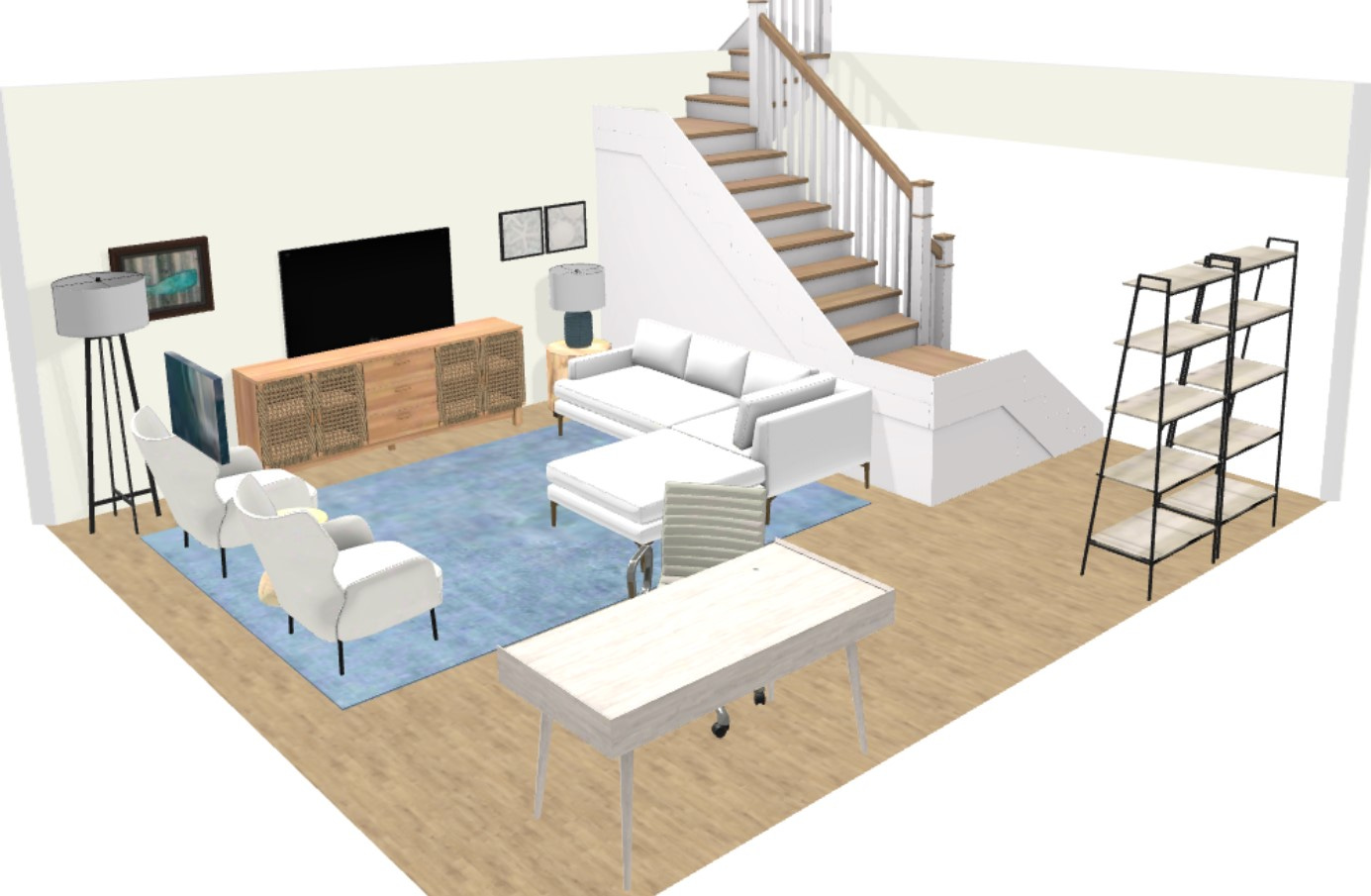
🟨 Other / Emerging Platforms (Modsy legacy, independent e-designers, hybrid studios)
Trends:
Some large platforms (like Modsy) struggled with cost structure and scalability
Independent designers offering virtual services often report:
higher client satisfaction
lower volume
better alignment when expectations are clear
This suggests platform scale doesn’t always equal service consistency.
What User Feedback Tells Us (Beyond Star Ratings)
When you read hundreds of reviews, patterns emerge quickly.
Consistent positives:
clarity on budget
reduced overwhelm
confidence to move forward
visual confirmation before purchasing
Consistent frustrations:
misalignment between taste and final design
limited back-and-forth
difficulty translating plans into real-world execution
“It looks good, but I still need help”
This gap is important.
It shows that virtual design solves the decision problem, but not always the implementation problem.
Why Virtual Design Isn’t Replacing Designers
Despite growth, virtual services have not replaced:
renovation-heavy projects
complex layouts
emotionally charged decisions
clients who want hand-holding or advocacy
Instead, the data suggests:
virtual design expands the market downward
full-service design remains protected at the top
a large middle segment is price- and confidence-sensitive
This mirrors what we’ve seen in other professional services:
automation increases access — but does not eliminate expertise.
What This Means for Designers & the Home Industry
For designers, stagers, and real estate professionals, virtual design signals:
growing price sensitivity
demand for faster decision-making tools
increased importance of clarity over creativity alone
a market willing to pay something — but not everything
For clients, it reflects:
economic uncertainty
time scarcity
desire for control
reduced tolerance for open-ended processes
The Bigger Signal
Virtual interior design didn’t grow because people stopped valuing designers.
It grew because:
housing became more expensive
renovation risk increased
people needed guardrails, not indulgence
That’s not a design problem — it’s a market one.
And markets always show up in the work.
Final Thought
Virtual interior design isn’t a trend.
It’s a structural adaptation.
Understanding who it serves, where it fails, and why it persists gives us better insight into the broader interior design and housing landscape — far more than any colour forecast ever could.
Sources & References
This analysis draws on a combination of market research reports, platform disclosures, consumer review data, and housing / design industry research, with interpretation based on observed market behaviour rather than single-point forecasts.
Market Size, Growth & Adoption
Grand View Research – Online Interior Design Services Market Size & Forecast
https://www.grandviewresearch.comFortune Business Insights – Interior Design Services Market
https://www.fortunebusinessinsights.comStatista – Online interior design services usage and growth trends
https://www.statista.com
Platform Information & Pricing
Havenly (platform pricing, service structure, onboarding model)
https://www.havenly.comDecorilla (pricing, service tiers, 3D rendering offerings)
https://www.decorilla.com
User Feedback & Review Analysis
Trustpilot – aggregated user reviews for Havenly, Decorilla, and similar platforms
https://www.trustpilot.comGoogle Reviews – platform-specific consumer feedback
Reddit – long-form user discussions in communities such as:
r/interiordesign
r/HomeDecorating
r/FirstTimeHomeBuyer
(Used to identify recurring themes rather than individual complaints.)
Canadian Housing & Consumer Context
Statistics Canada – household spending, housing costs, and consumer behaviour
https://www.statcan.gc.caCMHC (Canada Mortgage and Housing Corporation) – housing market dynamics and affordability pressures
https://www.cmhc-schl.gc.caRoyal Bank of Canada Economics / BMO Economics – housing and consumer confidence analysis
https://thoughtleadership.rbc.comhttps://economics.bmo.com
Industry & Professional Context
American Society of Interior Designers (ASID) – design industry trends and client behaviour
https://www.asid.orgHouzz & Home Renovation Reports – renovation behaviour and budget trends (used comparatively)
https://www.houzz.com
Methodology Note
This post intentionally avoids relying on a single dataset. Instead, it combines:
published market estimates
platform-level disclosures
qualitative review pattern analysis
regional housing and affordability data
professional observation across design and real estate–adjacent work
Figures should be read as directional indicators, not precise forecasts.